Tuesday, October 14, 2014

We Share The Same Surname In A Small Town? Are We Related?

Minnie Nolan Harrell
Many African-American people, whose ancestors were slaves, carry the surname of the last slaveholder or the one they chose after the emancipation proclamation ended slavery in America to this present day. 

Children were sold away from their parents, and fathers & mothers were taken away from their children. Many a times they were sold to other plantations. Sometime the children who were slaves were given to the daughter or son of the plantation owner as a wedding gift to them, often time never to be seen by their family member again.

One of the first things that some newly freed slaves did, when they received their freedom was to started searching for their lost family members. Mothers walk miles looking for their children. Some men started an all-out search hoping to find their wife and children.

Point in case; if there are several people in a small community that carries the last name Hudson, and you ask them if they’re related to the Hudson’s in the same town. They may say to you that they aren’t. The first question that I ask them is “how do you know that you aren’t related to them?” They can’t answer that question because they don’t know if they are related to them or not.

As a genealogist, I hear that quite often.  One piece of advice I can give them is that i they would conduct their family history they would be certain of their history.  I always advise them to speak with the oldest person in the family and find out what he or she knows and if they are willing to share their family history with them. Ask questions about the family and sit back & listen to the answers.

My grandfather Alexander Harrell had other siblings that no one in my family knew anything about.  His siblings were John, Anow, and Marietta, and we know nothing about them or their descendants.  So my point is John, Anow and Marietta could have had children. So if someone asked someone in my family if they are related to the Harrell’s in Roseland, Louisiana, they just might tell you no. They could be the descendants of my great grandfather’s brothers and sister.

That is why it is important to conduct a research to find out if there is any kinship involved.  Especially, if they live in the same area as that of your family. Although, slavery was abolished in 1863, effects of it can still be felt today.  Some genealogists and family historians are still searching for their long lost relatives. I am one of those genealogist’s who is still searching for my great grandfather Alexander Harrell’s sibling descendants.

My mother often said that her father Jasper told her that his father was from Clinton, Louisiana. Jasper was only two years old when his father Alexander Harrell passed away in 1914 in Tangipahoa Parish, Louisiana. Jasper knew very little about his father Alexander and his other siblings.

Could this be where we got another set of people that share the same surname us and our family have? Should we conduct a genealogy research to find out whether these are the long lost family members that our ancestors were looking for?


When I am conducting my family history on the Harrell’s side of the family, I know that any Harrell in Clinton, Louisiana could be a relative.  It was recently that I met a police officer in New Orleans, Louisiana by the name of Stephen Harrell who knew that his father was from Clinton, Louisiana.  Although we haven’t confirmed that we are related, we haven’t dismissed the thought either.  We are still conducting a research to find out whether there is a connection or not.

After all everyone on a plantation carried the last name of the slaveholder. I looked at the slave inventory list and at the 1870 U.S. census to answer some of the questions about our ancestors’ life after slavery.  The 1870 U.S. census is the first census to record the names, gender, and race of African-American people unless you were a free person of color, or an African-American slaveholder.

Being three generations removed from slavery, I can see why many genealogists and family historians are still searching for their missing family members. After all that is the first thing that some of the new freed slaves did, they searched for their family members who were sold off. Some walked miles and miles searching for their relatives.

Further studies using DNA testing should be used in studying African-American people, who came off the same plantations with the last surname. Some may find that they are related to each other. My grandmother Emma Mead Harrell had thirteen children by her husband Alexander.  Alexander had children by another woman who lived in the same town. The older family members didn’t say how many children he had with the other woman and this I found out at my grandfather Jasper’s funeral.

It was revealed when someone asked the lady who was sitting on a bench that was earmarked for the family to sit. The lady responded by saying that she was his sister. This is how my mother and other family member found out that my grandfather Jasper had other siblings outside of his parents, Alexander and Emma.

This wasn’t at all an uncommon situation. There are many similar situations in various small towns across America where slavery took place.


Monday, September 22, 2014

In Touch With Our History in St. Helena Parish, Louisiana

Antoinette Harrell and Bernice A. Bennett researching
family history in St. Helena Clerk's Office
Whenever I visit the St. Helena Clerk of Court office to conduct genealogy research, I prepare myself to spend the entire day. There are so many records and documents to read. The marriage, conveyance and other indexed books are very helpful, if you would like to see the original documents you can tell the employees and they would gladly pull them for you.

After finishing my research in the courthouse I went to the St. Helena Parish Branch library. There isn't many African American genealogy family history books in the library. I made copies of all the family records that I could find of my family members on all side of my family, and any other record that's vital to my family research.  Once I left the library, I visited Rocky Hill A.M.E. church were my 2nd great grandfather Thomas and his wife Amanda Richardson are buried. Their graves were easy to find because they have headstones. Amanda Breland Richardson was born in Livington Parish, Louisiana in the mid 1800s. 

Rocky Hill Cemetery, St. Helena Parish
Several branches of my family roots are deeply connected in St. Helena Parish, Louisiana. The Richardson, Hart, Burton, Boykin and Harrell records can be found and I still have relatives that reside in St. Helena Parish. 

My plans is to go back and look at other records that had been buried in the dust. Since I've been traveling back and forth conducting genealogy research, I found one other African American person researching their family history and that is a woman by the name of Myrtis Johnson. Myrtis was looking for slave cemeteries, and I'll never forget the first time she took me to a slave cemetery in St. Helena Parish. There were over forty unmarked graves. She managed to get the graves cleaned off and add some head and foot markers put on the graves. 

I asked her did she know the names of any of the people in the cemetery,  she said that someone gave a few names. I wanted to know if Carrie Richardson was buried in that cemetery. I would like to find other information about Carrie. I do know she was sold to the Kemp family in St. Helena and that's all I know about Carrie.

St. Helena Parish has beautiful land. If you live close by and are looking to take a country scenic ride, St. Helena Parish is the place to visit. I often stop and talk with elderly people who were sitting on their front porch. I enjoy sitting a spell as they would say to talk with them, I soon learn that I'm talking to a walking library so I sit, listen and take notes, especially when you are talking about people they know and events they can recall.  If I'm lucky they will pull out a photograph of their loved ones.   

Sometimes I feel like I stepped back in time, a time when life was much simpler.  My ancestors who were slaves saw the harsh treatment of the slave masters and planters. But they remained in St. Helena and called it home. As a matter of fact, some will tell you that there is no other place they would rather live. The smell of the morning fresh air, trees whispering, birds chirping and the morning dew can be found on the green grass and beautiful meadows.

Most of the people who live there wouldn’t trade the beautiful and quiet parish for life in a busy city.  They will stay their until they are called on to “Glory” as they would say. Genealogy has no ending, I can only research and document what I found until the next genealogist or family historian comes along and pick up where I left off. 

Friday, September 19, 2014

Records In The St. Helena Parish Vault

St. Helena Parish Courthouse
One of my favorite places to research is the St. Helena Parish courthouse in St. Helena, Louisiana. There are so many document and records that can help you when you’re researching your family history. Although you can no longer go into the vault to pull the records for yourself, but one of the employees will gladly pull the records for you.

I found the succession records of Benjamin Richardson and my ancestors Carrie and her child Thomas were listed in his inventory as well as  how much they appraised for. Some of the records are crumbling up and are in bad shape and need to be preserved. There are records such as: the Asylum Records, Crop Lien Records, Marriage Records, Land Records, and Court Records housed in the vault.

If your ancestors were slaves in St. Helena Parish, the inventory list can be very vital to anyone who is researching their family history, especially if they come from St. Helena Parish, Louisiana.  Researching the history of the slaveholder family might give you some answers you were looking for.

I got a full understanding of crop liens when I found the application of those who were borrowing
money to plant their crops. The application named the person who applied for the services. They also gave you a legal description of the property and how much money they borrow against the crops.

When I first opened the drawer to access the files in the vault, my eyes filled with tears of excitement when I found my ancestors in the succession records. I was pulling their files for the very first time, I found them and who owned them.

Bernice A. Bennett and Antoinette Harrell inside the vault
I couldn’t help but wonder what was that day like for Carrie and her child Thomas Richardson who appraised at $1,100 dollars. As I continued to review the succession and inventory list, I wanted to know if the others people on the inventory list were related to Carries in some way.

Standing inside the vault and looking at old file cabinets that I had seen on the television series "Gunsmoke" wondering how long it had been since anyone opened these files outside of the employees who are employed there.  Pulling the files for the first time and opening them to look at the records was like freeing my ancestors and letting them know that I came back to learn more about their lives as slaves in St. Helena Parish, Louisiana.

I took the files and sat at the desk with my fingers cross in high hopes that I would find more of my ancestors.  Reviewing the succession records of Benjamin and Celia Bankston Richardson and looking at all the slaves they own on their plantation. I wanted to know if any of the other slaves were related to Carrie, could one of the women on this inventory list be her mother?

I wanted to know more about Carrie. Where did she come from? Who did they purchase her from? Was she one of the Africans’ who was kidnapped and sold into slavery? Who were her mother and father? Did she have other siblings? What cemetery is she buried in?

As I continued to look inside the vault, I found the crop lien records of people who borrowed money to grow their crops. I found my maternal grandmother Emma Mead Harrell and her son Jasper in those files. Jasper’s brother Palmer Harrell’s application was there also. 

Scanning the room looking at the old books, the policy jury records, criminal records, and the asylum records, my curiosity has gotten the best of me and I wanted to look at those asylum records.  For what medical reason was that person  sent to East Louisiana Mental Hospital?  I knew my maternal great-grandfather Thomas Richardson spent many years in the asylum and I was hoping that I would have found his medical records, but I was out of luck here.


When I visit the St. Helena Clerk of Court office to conduct genealogy research, I can stay all day. There is so much to see and so many records and document to look at. The marriage records are indexed in books and if you would like to see the original marriage license you can tell the clerk and she would be glad to pull them for you.

Thursday, September 18, 2014

The Precott Plantation In St. Helena, Louisiana


Genealogist and Author Bernice Alexander Bennett
Bernice Alexander Bennett spend long hours conducting genealogy research at the National Archives in Washington, D.C.,  Her genealogy roots are connected to the East Florida Parishes and Orleans Parish. Researching the Freedmen Bureau Records is her specialty. A very special thanks to Bernice for sharing these records with Nurturing Our Roots and Preserving Our History in St. Helena and Tangipahoa Parishes, Louisiana.

The following contract is from the Precott Plantation of St. Helena Parish, dated August 5, 1867. The list below are the names of all the people who was working on the Prescott plantation in St. Helena Parish in 1867. They could read or write, they made their (x) to confirm that they were in agreement with the contract. She found her on maternal great-great grandfather in the slave inventory, he appraised at $1,700 dollars and was purchased for $1, 500 dollars. If anyone with the surname Sweeny, I hope that you find your ancestors on the contract. 

The records by the Freedmen's Bureau through its works between 1865 and 1872 constitute the richest and most extensive documentary source available for investigating the African American experience in the post Civil War and Reconstruction eras. Historians have used these materials to explore government and military policies, local conditions, and interactions between freed people, local white populations, and Bureau officials. 


Name                      Age    Sex

Nathan (x) Sweeny 48    Male
Lotta    (x) Sweeny 19    Female
Ellen    (x) Sweeny 15    Female
Albert  (x) Sweeny 12    Male
Joseph (x) Gordon  42    Male
Sebrum (x) Washington      


Wednesday, September 17, 2014

The Undocumented History and Culture of African American People in St. Helena and Tangipahoa Parishes, Louisiana

Agreement with Freedmen Contract
Courtesy of  Bernice Alexander Bennett
Tangipahoa Parish began in 1869, when it was carved from Livingston Parish, St. Helena Parish, St. Tammany Parish, and Washington Parishes, Louisiana. According to the Tangipahoa Parish Quick Facts from the U.S. Census Bureau,  Black or African American percent alone was 30.3%. Tangipahoa came from an Acolapissa word meaning “ear of corn” or “those who gather corn.”

Earlier settlers emigrated from South Carolina and Georgia in the late eighteenth century. The parish is a blend of several noted cultures: Scottish, English, Irish, and Italian.  Although there is a large African American history that blends into this parish as well, very little is written or documented about the African American people, their history or their culture. Slavery was abolished in 1863 and many newly freed slaves came from St. Helena, Washington and Livingston Parishes into Tangipahoa Parish. A large percentage of African Americans remained in the parishes where they were held as slaves, and some migrated to Tangipahoa Parishes as sharecroppers on farms or plantations.

Sharecropping became widespread during the end of slavery and after Reconstruction.  With no food, shelter, clothes, land, seed, tools and money, the former slaves had no other choice but to seek employment by signing contracts that would perhaps bond them to a new form of slavery called sharecropping.

An Agreement with Freedmen was contracted that listed former enslaved African Americans on by the Holloway Plantation in 1868 who remained or moved to the plantation seeking employment. The Holloway Plantation listed the following people who worked on their plantation and signed their mark (x) because they couldn’t read or write. The following people below were listed on the Agreement with Freedmen contracts for the Holloway Plantation.

Simone (x)  Holloway 35,  Ellen (x) Holloway 28, Sally (x) Holloway 13, Ada (x) Holloway 12, Carolina (x) Holloway, Julia (X) Holloway 16, Louise (x) Holloway 15, and Bell (x) Holloway.

The Agreement with Freedmen contracts bonded them to a new form of slavery called sharecropping or peonage.  The sharecropping system is a system of agriculture in which a landowner allows a tenant to use the land in return for a share of the crops produced on the land. While there were some advantages to sharecropping, there were often corrupt situations where African American and other poor people of color were cheated out of their wages because they couldn’t read or write and had no one to turn to for help or justice.

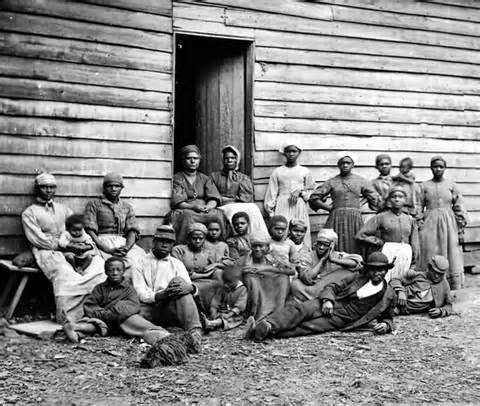
The disadvantages of sharecropping quickly became apparent. The new system of credit, peonage,   Many African-American sharecroppers complained of being told that they owed for that year of crops, even though they knew that they made a good harvest. They couldn’t dispute what the landowner said was on the account books. Crop liens and loss of land became associated with sharecropping.
Photo Credit: Library of Congress

Today, you can’t find many people, black or white, who will talk about the history of slavery, segregation, peonage or sharecropping.  Many African Americans who were sharecroppers up until the mid-sixties can still be found in the parishes of Tangipahoa, St. Helena, Washington, and Livingston.

The harsh realities of the time and period of sharecropping unleash bitter memories that many choose to block from their memories. The days of beating, murders, rapes, and being called derogatory names is what keeps them from wanting to talk about it.

Part of me can understand not wanting to re-live the harsh life as sharecroppers or peons. However, learning about the history of the African American life in the East Florida Parishes is absolutely crucial, and so African Americans who lived in the parishes must discuss and document their past history.

There are many Ruby Bridges that can be found in the East Florida Parishes that keep their own voices silent.  The 1965 Selma to Montgomery march, also known as “Bloody Sunday”, was one of the marches that led to the passing of the 1965 Voting Rights Act.  The birth of the civil rights movement for the East Florida Parishes  took place in Washington Parish, Louisiana in a town named Bogalusa in August 1967, where African Americans marched from Bogalusa to the State Capitol in Baton, Louisiana for equal economic opportunities, equal education, desegregation of all public accommodations and facilities and other discriminatory laws.

History tells us that P.B.S. Pinch was the first African American Governor in our nation’s history. He was the son of a planter and an emancipated slave. He was elected to the Louisiana Senate in 1868 and, three years later, became acting lieutenant governor when Oscar Dunn, the first elected African American lieutenant govern in American history, died.

Did the former slaves and African American sharecroppers pass their fears of living in the Macon Dixie line down to the present generations? The fear of talking about their own history and the history of their ancestors who were slaves is still prevalent today in the East Florida Parishes. No one should be afraid to talk about or discuss their family history.

A genealogist’s ultimate goal is to get more people interested in researching, documenting and preserving their family history in genealogy libraries, universities, and other repositories. Indeed, family history makes up the history of parishes or counties.

There are many historical and cultural events that have taken place in the African American communities in the East Florida Parishes that need to be recorded and documented for study.

Early African American noted pioneers in Tangipahoa Parish like Fred McCoy, Rev. Willard Vernon, Emma Mead Harrell, Reginald Cotton, Sr., Spelman Jones, Willie K. Gordon, Sr., Alexander Richardson, Dr. Walter Reed, and Dr. Percy Walker and many others helped shape the African American communities. However, some will agree that communities in the Town of Amite, Louisiana, like Clemmons, Hyde and Reid Quarters should be renamed. These communities are predominantly African American communities and yet they still carry the names of large plantations or planters.  In the 21st century, African American people in these communities are still calling their communities “the quarters”. It could be a possibility that the African American’s of those communities don’t associate the word “quarters” with slave quarters.

 After approaching several African American Town Councilmen who sit on the Amite City Council asking them to consider passing a resolution to rename the community is the first step. The African American’s who live in the communities need to contact their council person and ask them to support and pass the resolution to renamed these African American communities.


Unpuzzling Our Family History and Our Past

Antoinette Harrell conducting research in the
St. Helena Parish, Louisiana
A genealogist is one who studies the family history, events, places and records. Often times we spend a great deal of time researching family’s vital records and documents, preserving our history, family photographs and collecting oral history. Thinking of genealogy with a twist--one may ask the question what that means? Well, the question that I often ask is, “What have we learned from the past? How are we applying what we learned? Have we strived for success, or have we regressed?”

I have talked with many people who don’t think that family history isn't important. I am the third generation from slavery. My third maternal great-grandfather Thomas Richardson was a slave born on the Benjamin and Celia Bankston plantation in St. Helena Parish, Louisiana. Thomas and his mother Carrie appraised for $1,100 dollars in 1853. Not much is known about Carrie and her son Thomas after they were sold to the Kemp Family. However, I know that after the freedom bell rung in 1863, Thomas married Amanda Breland of Livingston Parish. They had five children; Thomas, John, Sophia, Annie and Golene.

Gordon Family
Thomas, my great-great-grandfather married Emma Vining.  During their union, they gave birth to four children; Rosabell, Alma, Josephine and Alexander .  My mother shared the oral history that she   She said that he spent most of his life in East Louisiana State Hospital in Jackson, LA for mental illness.


 I interviewed several people that knew him.  They knew him as Mr. Moss or Uncle Moss. One thing they all pointed out during the interview was that Moss was a very intelligent and handsome man. He passed away in 1958 in Amite, Louisiana.  My mother was the only person in the family who would talk about him and the illness he suffered and share the information she knew about him.

We can learn so much from our family history if we chose to study it. The oral history passed down to me about my grandfather Thomas are very helpful to me, and I hope that others family members find this information helpful for medical information.

Thomas's descendants went on to become successful people,  many have earned college degrees and  hold the occupations as engineers, lawyers, doctors, educators, entrepreneurs, ministers, dentists, entertainers, television talk show hosts, authors, law enforcement officials and other careers. Yet, I can’t help but wonder if these people who have become successful in their careers ever think about their ancestors and were forced into slavery and who shoulders they stand on.

I wonder if they ever think about paying tribute to those who endured the long, hot days in the cotton fields working for the slave masters, being sold on the auction block and never to see their dear loved ones again. What was life like for Carrie and her child Thomas? Did Carrie have other children? If so, where are they and who are they? Perhaps I am looking at her offspring every day, not realizing that I am actually seeing a relative.

Why we've chosen to forget our history is a puzzling mystery! What impact would it have on the youth if we told them about their history? Why aren't we telling them about slavery and Jim Crow? Perhaps we think that we're saving them from something without realizing that we’re hurting them by keeping the truth from them.

Some people are ashamed of their history and avoid the topic of slavery and its widespread effects. I wanted to know about my ancestors, where they came from, if they were free people of color, or if they were slaves. If they were slaves, who owned them? What kind of plantation did they live on?

What happened to them after the freedom bell rung? What did they do and where did they go? I may never have all the answers, but at least I can pay tribute to them for all that they endured for me. We’re are talking about people who had little or no formal education, but nonetheless purchased land and build their own homes with no mortgages. They fed themselves from the food they grew and kept themselves warm with the wood from the land they owned. They understood what freedom meant. Today, we define ourselves by material things, we have lost sight of the things that should be most
important to us, and we pass those same senseless values down to the next generations.

What ever happened to the respect for the community and ourselves? The elders in the community would come together to solve problems; they would share food with one another, help take care of those who were ill and certainly took in children who needed homes and families. I often wonder if this was just a dream. At times, I even wish I lived in a world were we took care of our community.  It is the past that shapes the present, and the present that shapes the future? Where is our future headed if we don’t take responsibility for it?


We can learn valuable lessons by studying our own family history. I am grateful for the lessons I learned while researching my family history.  I found land ownership, home ownership, business owners, family members who were debt-free, and family members who cared about each other. Now I can pass these lessons down to my grandchildren.

Friday, September 5, 2014

Putting Our Children First By Bringing Educational Enrichment Programs to Our Parish


Exploring through the arts
Each district in Tangipahoa Parish, Louisiana should have a community resource enrichment center,  I've notice the lack of enrichment programs for the youth. Sports seem to dominate small rural towns all across America. We need after school programs and summer enrichment programs for our youth.  No town can grow without empowering the youth with enrichment education.

Enrichment programs such as cultural studies, music theater, college preparatory courses, computer science, art, foreign languages and film making are just some of the enrichment programs that should be considered.  Every child should be given the advantage of exploring learning through arts. If the community and schools offer these types of programs to the youth, it can only bring future success for the child, community and parish. Our primary focus should be to emphasize the importance of enrichment programs in our community.  
We should talk with  to our local school board members, our elect officials and community leaders about the need for enrichment programs.

These enrichment programs can offer field trips to local museums, state archives, state capitols and other places that affluent students will have available to them. Our goal is to help children achieve in their curriculums. If we want our children to develop a positive attitude toward school and learning as well as develop respect for others, the only way is through education  and cultural awareness.


Give A Child Hope Through the Gift of Reading and Learning

Giving the gift of reading
Imagine, for a moment, that you’re living in a rural town. Maybe you’re down on your luck between jobs, or maybe you’ve never had more than the proverbial 2 cents to rub together.  Perhaps you’re a child or teen gifted with the promise of a bright mind but limited opportunities to imagine life beyond the classroom. Or maybe you’re trying to escape impoverished situations at home and need information to put a plan together.

While it might seem obvious to many that for someone in such a situation, the library or community center would be a good place to escape, to learn, to dream bigger dreams and to just cling to hope, there’s just one problem.

There isn’t one.Welcome to the reality of life in the Town of Webb, MS., But in the bleakness of this reality, a spark of hope is being fanned into a great light. We have a vision of a Community Resource Center and Library for the town – a place of hope and possibility for people in this town and in the surrounding towns. It’s a vision that is shared by many – we’ve already collected over 10,000 books, art supplies, and other educational materials to be used in the community resource enrichment center. But there’s still a long road ahead. Will you be the one who carries the light of this vision to others in our community?

We need your help.  Specifically, we still need donations of art talents, time and contracting skills
to help us get the building prepared for the community center. You’ve probably heard over recent years about all of the cuts in state and federal funding for various things – including education. 

In small towns like Webb, the generosity of people like you makes a huge difference in the resources available for families and children. What can your gift accomplish?  By giving a child the gift of reading books that spark their interests, we’re opening up the doors of higher learning and giving them the opportunity to see the world through books and our other educational resource materials.

What can you do? We’re asking church, civic and school organizations – any individual or group who would like to make a difference - to join Gathering of Hearts in this effort. It all comes down to this.  If we hope to end the heartache of poverty in towns like ours in America, we must start with finding a way to give our youth – and all of us – the resources we need.

What is a Community Resource Center? 
Home of the new Community Resource Center in Webb, MS
The Community Resource Center is a place where students can spend time after school. They can get tutoring to help support them academically.  They’ll have opportunity to learn music, drama, the visual arts and performing arts.  We’ll be training members of the community – like you, if you’re interested – to serve our youth as mentors, helping them to discover the gifts of learning and culture that are surrounding them. 

As you know, the Mississippi Delta is the home of the blues. We’re a culture rich with art, music and some of the world’s finest blues festivals.  But the way to keep that culture alive is to bring it to our children, giving them the hope they need to become strong contributing members of our society as adults. We believe in our children and our families. Do you? 

Can we count on you or your organization to join us through Gathering of Hearts?There are opportunities for every kind of involvement, whether by donating money, time or resources.  Please contact us to find an opportunity to help that is right for you. As Mahatma Gandhi said “ Be the change you wish to see in the world.”

We all want to see a world that empowers all children to enjoy the adventure of learning, academically and through cultural experiences. If you would like to help us help our community’s children, please contact Gathering of Hearts at 504.858.4658 or you can email Antoinette Harrell at afrigenah@yahoo.com.

Gathering of Heart wishes to thank the many supporters who donated funds, books, educational material or perhaps you donated your time and effort to this cause. You kindness and generosity can never be forgotten. 

Monday, July 21, 2014

In Loving Memory of Bro. Johnnie Boykins

Johnnie Reed Boykins
Celebrated and loved by his family and all those he came into contact with,  Johnnie Reed Boykins transitioned to his rest with his Lord and Savior on June 4, 2014 at 10:30 p.m., at the Rehab Department of Kentwood Manor Nursing Home in Kentwood, LA.

Mr. Johnnie R. Boykins, Jr., was born on December 24, 1934 to the late Elnora Tillery Boykins and Johnnie R. Boykins, Sr., After the passing of Johnnie Boykins, Sr., Ms. Elnora was then united in holy matrimony to the late Linnie Walls, Sr., and he stepped up as Johnnie's stepfather and continued to raise him into the great man that everyone came to know. Johnnie was married to the late Amanda Bush Boykins and to this union 6 children were born. Years after the passing of Amanda, Johnnie married his current wife, Helen C. Bates of Kentwood, LA.

Johnnie was baptized and reared from an early age of Community Missionary Baptist Church in Fluker under the leadership of Rev. Bruce Hunter.  Johnnie was a graduate of the class of 1955 from Westside High. He attended Leland College in Baker, LA majoring in Culinary Arts. He later chose to join the military where he served our country for a number of years and received honorable discharge. Johnnie worked many years as a Long Shore man on the river were he remained dedicated until his retirement. After he retired, Johnnie became a successful entrepreneur and owner of various businesses: JR Boykins Trucking, Boykins Vault Company, and Angelic Funeral Home along with Mr. Darrell Calvey.

Johnnie will always be remembered for the love he shown others. He believed that every young man and woman should receive a proper education and be afford the opportunity to make something of
themselves. He sought to improve the African American community and surrounding communities. He often took many high school students to Mississippi Valley College and assisted them in registering in school and many received scholarships.  Johnnie did this out of his own expense. In many ways, he was a philanthropist and it meant everything to him to see a child become successful. His loving kindness was recognizable by any and everyone he met. He had a giving spirit and he would shared everyone he could if he was able to and he will forever be remembered for that.

He leaves to cherish his memories: his loving and devoted wife of 12 glorious years, Helen Bates Boykins; five sons: Darren, Wendell, Derrick, and Lyndon (Terry) Boykins of New Orleans, and Brian Richardson of Amite; two daughter; Rosalind of New Orleans, and Brittany Dillion (Brandon) of Amite; two God-daughters; Melody Showers of Hammond and Katherine Thomas of Fluker, a great nephew: Bobby J. Ginn; three brothers: Linnie Walls, Jr (Birdie) of Fluker, Percy Boykins (Ethel Bell) of New Orleans, and Hollis J. Walls (Mary Ann) of Houston, TX; one sister Darletta Turner ( Emile) of Baker; 12 grandchildren; 1 great grandchild; and a host of sister-in-laws, brother-laws, nieces, nephews, relatives and friends.

Johnnie was preceded in death by his mother, Elnora T. Walls; father, Johnnie R. Boykins; stepfather, Linnie Walls, Sr., brother Willie Boykins, sister Deloris Walls and son Tracy Boykins.

Wednesday, July 2, 2014

The Bush Family of Amite, Louisiana

My maternal grandmother Emma Mead Harrell was the daughter of John and Emily Bush. Emily later married Tony Bush. According due the Warranty Deed that was files in the State of Louisiana and the Parish of Tangipahoa on December 6, 1923. Tony and Emily had five children born to their union. Alice Bush, Maggie Bush Perry, Hannah Bush Leonard, Tony Bush, Jr., Peter S. Bush.

Know all men by these presents, that I , Tony Bush, of lawful age, married twice, first to Mamie Temple, now dead, second to Pearly Clark who is living and residing with me. Alice Bush, of lawful age, singe, never married, Maggie Perry Nee Bush, of lawful age, married twice, first to John Denman, who is dead, second to Amos Perry, who is also dead, Hanna Leonard Nee Bush, of lawful age, married once then to Arthur Leonard, who is living and residing with me, Emma Harrell of lawful age, married once then to Alex Harrell, who is now dead, all resident of the Parish of Tangipahoa, and Peter S. Bush of lawful age, married twice Ida Butlers, divorced second to Olevia Hicks, who is living and residing with me. a resident of the City of New Orleans, herein appearing by and through his agent and attorney in fact, Tony Bush, as per power of attorney hereto attached and made part of this deed, all resident of the State of Louisiana,

Emma Mead Harrell Left Footprints in the Amite City Courthouse


Johnny Harrell researching with genealogist
Antoinette Harrell
My cousin Johnny Harrell and I spent the early morning hours searching for property records on our Harrell ancestors in the vendors and vendees books. Our attention was drawn to the records of their mother Emma Mead Harrell as we looked through the records of Palmer and Jasper Harrell, Sr. Emma Mead Harrell was an assertive woman during her time. In addition to acquiring land and farming it, she also sold the produce at the markets and community.

I was delighted to see a descendant of Alexander and Emma Mead Harrell wanting to know his family's history. Johnny left the Amite City Courthouse with a great deal of gratitude for his paternal great grandmother Emma. His knowledge of her and the legacy she left him was greatly enhanced. This is the first time a descendant of Palmer Harrell has researched the Harrell family history with me.

Emma Mead Harrell was Alexander Harrell's widow. In 1896 and 1902, she purchased land in Tangipahoa Parish from the U.S. 6th Congressional District of Louisiana. Bolivar Kemp was a Democrat who won the primary election for the 6th District seat in 1924 and won the general election without opposition. Esther Edwards Conner, better known as "Lallie" Kemp, was his wife. The Louisiana Hospital Board appointed her to its board in 1937 by Governor Richard Leche, and she passed away in 1943. Independence, LA, named its medical center after her..

Bolivar E. Kemp
Member of the U.S. House
of Representative from
Louisiana's 6th District

My maternal great grandmother Emma Mead Harrell purchased eleven and 64/100 acres of land from Bolivar E. Kemp. They personally appeared before Louis F. Lefevre, a notary public, duly commissioned and qualified in and for the Parish of Tangipahoa, State of Louisiana. This was done in the presence of the witnesses hereinafter named and undersigned. Bolivar E. Kemp, of lawful age, married once, then to Lallie Kemp, Emma purchased the land for consideration of the price and sum of three hundred and no/100 ($300.00) dollars cash in hand. The witnesses were Lorina L. Ponder, Carroll Buck.


Saturday, May 10, 2014

Celebrating the Beautiful Life, Love & Legacy of Mother Helestine R. Williams

Missionary Helestine Richardson Williams, a woman of virtue and grace, a humble servant of God, was born on March 8, 1934 to the late Supt. Alexander Thomas Richardson and the late Missionary Melisa Wheat Richardson in Amite, Louisiana. She was the third and only girl of ten children. Missionary Williams, a reverent woman of prayer, professed a sincere hope in Christ at a young woman.

Missionary Williams married the love of her life, the late Joe Wallace Williams, Sr., To this union, five children were born: Joe Jr., Gregory Sr, Chandra, Stephanie and Basiel (Tim) Sr., Affectionately known by many names such as, Stine, Auntie Stine, Helen, Mommie, and Grandmother, she raised her family to love the Lord with all their heart because that's what she was taught and firmly believed.

She was Godly example for many Missionary Williams was known for many of her most famous sayings such as, "Surrender to the Lord," Run for your life while you have time,' "Say Yes to His Will and Yes to His Way," " Our only hope is in the Lord," Train up a child in the way he should go," and the prophetic one, " The Lord is gonna get these people about lying on him. " After a conversation with her, if you didn't know the Lord, you left that conversation knowing that you needed to be saved.

For many years, while living in Houston, Texas, Missionary Williams was a faithful Prayer Warrior, licensed Missionary and an active supporter of New Bethel Temple COGIC, Supt. Harold Tisdell, Pastor. She served in many capacities including the Texas Southwest Jurisdiction Mother's Board Vice President under State Supervisor Annie M. Cooper. After moving back to Louisiana in her later years she was blessed to fellowship with God's Tabernacle of Deliverance COGIC, Supt. Willie Cage, Pastor and reunited with her childhood church, Gordon-Richardson Temple of Deliverance where she served under the leadership of her own brother, Supt. Emmitt Richardson, Sr.

Throughout her many accomplishments, Missionary Williams was privileged to attend San Jacinto Community College of Pascadena, Texas where she studied Dietary and Flora Arranging. She was a licensed child advocate and foster care agency owner for the state of Texas. This modern day Dorcas was woman who pressed through many years of adversity, trials, and tribulations with the help of the Lord and came a might long way.

On March 8, 2014, she celebrated 80 years of life with a grand birthday dinner. Upon her entrance into the banquet hall, she was so elated to be honored by family and friends who came from far and near. The first thing she utter was " Oh my Lord, look-a-here at all these people. What a privilege it was to celebrate the beauty, life and legacy of our precious jewel!

The Richardson Family 
Loved and adored by many, Missionary Williams left an undeniable legacy throughout her family, church and community. She is survived and will forever be remembered by her five children: Pastor Joe (Gayle) Williams Jr., Elder Gregory Williams Sr (Shaun). Evangelist Chandra W. Kelley; Mother Stephanie W. Wyatt; all of Houston, TX; and Basiel "Tim" (Lula) Williams Sr., of Hammond, LA; nineteen beautiful grandchildren and ten great grandchildren, whom she cherished dearly; four brothers: Supt. Emmitt (Carolyn) Richardson of Kenner, LA, Joseph (Joyce) Richardson of Bogalusa, LA, Earl (Diane) Richardson of Amite, LA, and Darnell (Gayle) Richardson of Hammond, LA; numerous nieces, nephews, cousins and church families.

She was preceded in death by her husband, Joe W. Williams, Sr., her parents, Supt. Alexander Thomas Richardson and the late Missionary Melisa Wheat Richardson five brothers: Thomas Richardson, Sr., Walter Richardson, Sr., Alex Richardson, Jr., Supt. Samuel Richardson, and Elder Nathaniel (Alma) Richardson, Sr., and daughter-in-law, Missionary Joycie L. Williams. She will forever be loved, cherished and honored in our hearts.

Friday, May 9, 2014

The Mose and Idella Williams Dudley Family History

Charlie Collins, Sr. 
Remembering home, remembering the old landmark, remembering what was our fondest memories for me and many of my cousins as we approach fifty. Many of us in our own immediate families and some of us having grandchildren, they're my first-cousins, my close friends it all seems so unreal.
Because now we are telling our newest family members of what we took for granted our-- family history of gathering together on Sundays to watch our family softball team that played every Sunday in Kenner at the old Morgan playground field, The Cade Raiders and The Cade Raiderettes.
My grandparents, Charles Cade Sr., and Mable Dudley Cade had sixteen children, eight boys and eight girls. Like most large families, they did everything together; they lived, loved and played together as a family—they instilled that in us that family is important, and that family was first, and  keep your faith in God. For the longest of time, because I had so many first cousins, my first cousins were my friends. My cousin Thomas Brown was my best friend for the longest time. I have four cousins the same age as I am.  Even to this day, I think this is the benefit of growing up in a big family, but close family. We all know as cousins that we always have each others back because we’re family. I think my grandmother stressed this too us because she was the only daughter of Mose and Idella Williams Dudley. My grandmother had one brother O.D. Dudley.
Mose Dudley
We remember her always talking about her childhood in Tangipahoa Parish. I remember her talking about Tangipahoa Parish and Amite, LA.,  So whenever, our extended family came from Amite to visit New Orleans on a weekend, It was always a fun time that would last all day Friday and  throughout the weekend: Aunt Sydney, Aunt Daisy, Cousin Latham, Uncle Oscar, Uncle Bud, Aunt Maggie, Cousin Mildred, Cousin Ann, Cousin Shirley, Cousin Norma Jean,  and Cousin Betty. Words couldn't expressed how happy everyone were to see each other and how happy everyone were to just get together as family either in Amite or in New Orleans-The Dudleys and Cades.
I can go on and on about great times with our family as most of my cousins can share, the food, the laughter, oh we did a lot of laughing together, a lot of good nature teasing, kids everywhere playing, kids jammed into the living room on pallets, but I think we would all give anything to hear our grandmother or Aunt Mae saying, “hey baby, come on in”
Melvin Collins III

Tuesday, April 29, 2014

Trade of Slave Jeremiah in St. Helena Parish by Jane Holiday

St. Helena Parish, Conveyance Records:  Reddy to Fletcher
Submitted to the USGenWeb Archives by Jane Holiday, Sep 2007


**********************************************
Copyright.  All rights reserved.
http://usgwarchives.net/copyright.htm
http://usgwarchives.net/la/lafiles.htm
**********************************************
 

St. Helena Parish
Conveyance Records
Book F Page 69 & 70

The State of Louisiana Parish of St. Helena}  Be it remembered that on this 
the tenth day of July in the year of our Lord one thousand eight hundred and 
thirty eight.  Before me Samuel Leonard Parish Judge and Ex officio notary 
public in and for the Parish and State of aforesaid personally appeared 
William Fletcher of said Parish who produced the following instruments of 
writing requesting the same to be admitted of record in the words and figures 
following to wit- State of Louisiana Parish of St. Helena} Know all men by 
these presents that I Anny Reddy of the State and Parish aforesaid do hereby 
bargain, sell and deliver and by these presents have bargained sold and 
delivered unto William Fletcher of said state and Parish all my right title 
interests and claim to a negro boy named Jeremiah for and in consideration of 
the sum of five hundred dollars to me in hand paid.  And by these presents do 
warrant and defend the same against all persons whomsoever unto the said 
William Fletcher his heirs executors and assigns.  To have and to hold in ?an 
unto his heirs administrators and assigns forever August the 8th 1833.  Anny 
her x mark Roddy attest Goodeman Davis, L. B. Draughon- The State of 
Louisiana Parish of St. Helena personally affirmed L. B. Draughon of said 
Parish who after having been sworn according to law defends and says that he 
was an attesting witness to the foregoing instrument of writing that he was 
present and saw Goodemann Davis sign and another witnesses and was likewise 
present and saw Amy Roddy make ordinary mark as principle, L. B. Draughon.  
Sworn & Subscribed to before me this to before me this 8th June A.D. 1838. 
Samuel Leonard P.J.

Be it remembered that having carefully compared the foregoing instruments of 
writing with the ? ? I find it to agree in all respects and declare the same 
duly recorded the day and date first above written. Samuel Leonard P.J.

Fajoni-Lanier Photograph Collection

Fajoni-Lanier photography studio was located in Amite, Louisiana. He took photographs of Whites, African Americans, Italians, and Hungarians in Tangipahoa Parish. I looked in his collection and found these great photographs. I thought I would share with the readers of this blog.


The Center for Southeast Louisiana Studies Special Collections

The Center for Southeast Studies
Genealogist Antoinette Harrell and Doris Lloyd
One of my favorite places to research is the Center for Southeast Louisiana Studies in Hammond, Louisiana. My passion for genealogy goes beyond the scope of my own personal history. It's important to preserve and document the history of the communities.

The Center for Southeast Louisiana Studies preserves and promotes the history and promote the history and the cultures of Louisiana's Florida Parishes, Southwestern Mississippi, and surrounding area through scholarly research, lectures and publishing. If you are conducting genealogy research, "you may want to visit the Center for Southeast Louisiana Studies. You never know what  you may find that can help you with your genealogy research.


The Fajoni-Lanier Collection
The Center for Southeast Studies
I interviewed Dr. Samuel Hyde today and as always it is a pleasure to talk with him. We talked about so many topics as it relates to the Florida Parishes. My best friend Doris Lloyd  and my colleague Walter C. Black, Sr., went with me and we look through the Piney Wood and Fajoni-Lanier Photograph Collections. Although most of the photographs didn't have names on them it was good to look at the photographs of people who once lived in Tangipahoa Parish. The Fajoni-Lanier collection is mostly about the local  people. Looking at their faces, the clothes they wore,  and the images behind them say something about the photograph. The Harrell, Richardson, Gordon and Vining Family was fortunate to have a lot of old photographs of our relatives and ancestors.

I'm so happy to see that the collections was donated for preservation and not thrown away in the trash. Quite often this is what can happen when someone dies and family members go through their personal belonging. We must remember that we're throwing away our history.  Making the decision to donate your collections is preserving your history and the history of the community you live in.

I value old photographs and enjoy preserving them. Through the study of genealogy many people who live in St. Helena and Tangipahoa Parish has shared many of their photographs with me. With today technology its so easy to share with other family members and friends. Social media has allowed us to share precious memories, events and photographs of family members and friends instantly.

If you would like to donate your family collection and don't know where to start. Please contact "Nurturing Our Roots" for more information on how to preserve your family history.

 One of the main reasons that I preserve and donate my family history, photographs is because I want to preserve the family history and educate others in my family. I find it to be very important for my family and many of my family members appreciate it. Especially the younger people who want to know more about their family history. You can email me at afrigenah@yahoo.com.

Monday, April 28, 2014

Bush & Temple Cemetery in Tangipahoa Parish, Louisiana

BUSH & TEMPLE CEMETERY, Tangipahoa Parish, Louisiana
Recorded and Submitted to the USGenWeb Archives by Antoinette Harrell-Miller, May, 2001

************************************************
Copyright.  All rights reserved.
http://usgwarchives.net/copyright.htm
http://usgwarchives.net/la/lafiles.htm
************************************************

BUSH & TEMPLE CEMETERY
Amite, Tangipahoa Parish, LA

1. Amanda Bush Boykins
    Born: April 26, 1941
    Died:  Nov 14, 1993

2. Kedra Lama Burton
    Born: June 6, 1971
    Died: July 6, 1980
    Son of Elzy & Juanita Bush Burton

3. Helen Bush
    Born: July 24, 1926
    Died : 2000

4. Supt: Willie Lee
     Born: Feb 23, 1911
     Died:  April 24, 1980

5. Deacon Toney Bush, Jr
     Born: Jan 8, 1895
     Died:  Dec 5, 1972

6. Mother Mamie J. Bush
     Born: August 27, 1903
     Died:  July 2, 1971

7. John Ellis Bush
    Louisiana
    TN.US Navy
     World War II
     Born: April 18, 1925
     Died: March 3, 1963

8. Peter Bush
    Born: Oct 2, 1890
    Died: July 30, 1965

9. J. Granderson
     Born: July 8, 1900
     Died: Dec 9, 1988

10. Ameila Temple
      Wife of Charlie William
      Born: 1887
      Died:  May 27, 1924

11. Rev. Charlie William, Jr
      B. 1903
      D. 1982

12. John Temple
      B. April 15, 1874
      D. June 15, 1959

13. C.B. Temple
      

14. Mrs. Aline Temple
      B. June 6, 1903
      D. June 26, 1990
           Age 87

15. In Memory of 
      Bernard Temple'
      B. Sept 16, 1941
      D. Dec 13, 1962

16. Stanley Temple, Sr.
      B. 1907
      D. January 8, 1966

17. Shirley Temple Toney
     B. Sept 6, 1935
     D. Feb 11, 1981

18. Coreen Bush
      B. July 29, 1929
      D. May 14, 94
       Age 65

19. Linell Bush
      B. March 23, 1940
      D. January 20, 1996

20. Delores Bush McCormick
      B. 1943
      D. 1975

21. Victoria Bush Hayes
      B. June 14, 1939
      D. Nov 3, 1967

22. Vallera Bush
      B. Jan 19, 1907
      D. Dec 20, 1995

copyright @ Antoinette Harrell

Saturday, April 26, 2014

Ponchatoula, Louisiana First Black Mayor

Rev. Arthur Tasker, Tangipahoa Parish, Louisiana
Submitted to the USGenWeb Archives by Sandra McLellan, Jan. 2006
Special thanks to Jim Perrin for donating it to the archives.


**********************************************
Copyright.  All rights reserved.
http://usgwarchives.net/copyright.htm
http://usgwarchives.net/la/lafiles.htm
**********************************************
 

REV. ARTHUR TASKER

PONCHATOULA'S FIRST AFRICAN-AMERICAN MAYOR

BY JIM PERRIN, Local Historian

Four years of bitter fighting during the War Between the States ended in 1865 with the defeat of the southern Confederacy and the subsequent emancipation of former slaves now called "Freedmen."  The years following the end of the war were difficult ones for Southerners.  A new relationship between the Freedman and the 
more numerous white population had to be established during a period of economic 
distress, military occupation, and turbulent political upheavals.

Fortunately for Ponchatoula men of good judgment and character came forward to make 
this period of transition less traumatic than in many other areas of the Deep South. 
The most prominent of Ponchatoula's Freedmen during the Reconstruction period was 
Rev. Arthur Tasker.

Arthur Tasker was born ca. 1829-1835 in Virginia or Maryland.  Prior to the War 
Between the States, he was a slave of the Widow McCarroll and lived about three 
miles from Ponchatoula.  As a slave he was hired out and worked for different 
people including frequently working for William Akers, who lived at the edge of the 
new town of Ponchatoula.  With the defeat of the Confederacy, Tasker and the other 
slaves were now freemen, although they entered their new life of freedom with 
little or no education and possessed of no property to call their own.

Freedom also meant freedom of religion, and Tasker began to preach the Gospel to 
the freedmen in and around Ponchatoula.  Under his leadership like minded 
Christians held services and organized a church on 12 October 1867.  Tasker's 
congregation was part of the African Methodist Episcopal Church, Zion.

As Rev. Tasker's church family slowly grew in size so did his personal family.  He 
had married Sarah ________ (b. ca. 1840 in Virginia) perhaps during the war as 
their oldest child Mary was born about 1863.  The 1870 lists their other children 
as David, age 5, Clinton, age 2, and little Harriet, who was born in Jan. 1870.  By 
1880, Arthur and Sarah Tasker had been blessed with the addition of three more 
girls.

Sometime after the war Rev. Tasker and his congregation built a small church, that 
was also used as a school on the public square that is now called Kiwanis Park.  
The church was already in existence there in August 1873, when Rev. Tasker and his 
church members petitioned for and received permission from the town leaders to 
purchase half the public square for $25.  A Ponchatoula council meeting two months 
later in Oct. 1873 confirmed that the town had some years previously donated the 
square for the use of the church; and a church building, school, and cemetery were 
then present.  The papers donating the square were said to be lost by Oct. 1873 so 
the exact date of the donation of the square to the church is uncertain.

In September 1873, Rev. Tasker became mayor of Ponchatoula succeeding Eldred J. 
White, Sr.  He served as mayor for the rest of 1873 and through the spring of 1874, 
and probably even longer.  There is a gap of about three years in the town's minute 
books from May 1874 until June 1877, so it is not known who was mayor during this 
period.  Reconstruction formally ended in Louisiana in the spring of 1877 as 
Federal troops were withdrawn from the state.  William Akers was the mayor of 
Ponchatoula in June 1877 when the extant town records resumed and Rev. Tasker was 
serving on the town council.  Rev. Tasker resigned from the council at the 
beginning of 1878.

When the census was conducted in 1880, Rev. Tasker, Sarah, and the family were 
living in Ponchatoula.  Parish land records indicate that Rev. Tasker's family 
lived just north of Pine Street near Duncan's Branch which is west of the present 
Gabriel's store site.  Included on the 1880 census report with the family was their 
son William Clinton Tasker, and daughters Levina, Amma, Lois, and Augusta.  William 
Clinton Tasker continued in his father's footsteps, serving on the Ponchatoula town 
council in 1888, and also being a leader of his church.  Clinton was one of nine 
trustees of the African Methodist Episcopal Church, Zion, in Ponchatoula who 
negotiated the purchase of a square block of land in town for the establishment of 
a new and enlarged church in 1895.  Clinton Tasker married about 1888 to Martha 
______, and started his own family.  They moved to New Orleans by 1900, and among 
their four children at that time was their first born son, appropriately named 
Arthur Tasker.

It is not known if Rev. Arthur Tasker lived to see the birth of his grandson and 
namesake in April 1889.  Rev. Tasker was alive in August 1887 when he assisted his 
wife in the sale of some property in Ponchatoula, but his exact death date is not 
known to this writer.  At his death, Rev. Tasker was buried in the cemetery next to 
the church he had founded in the square. 

Rev. Arthur Tasker, a man whose faith led his congregation through difficult times, 
and advanced the goal of having a united Ponchatoula, is today memorized by a 
marker near his grave site in the park, the naming of a playground for him, and 
most importantly a living memorial in the Tasker Chapel Memorial Church which 
carries forth his good works.

Anyone with comments, questions, or additional information about Ponchatoula's 
rich heritage may call Jim Perrin at 386-4476.