Saturday, July 13, 2019

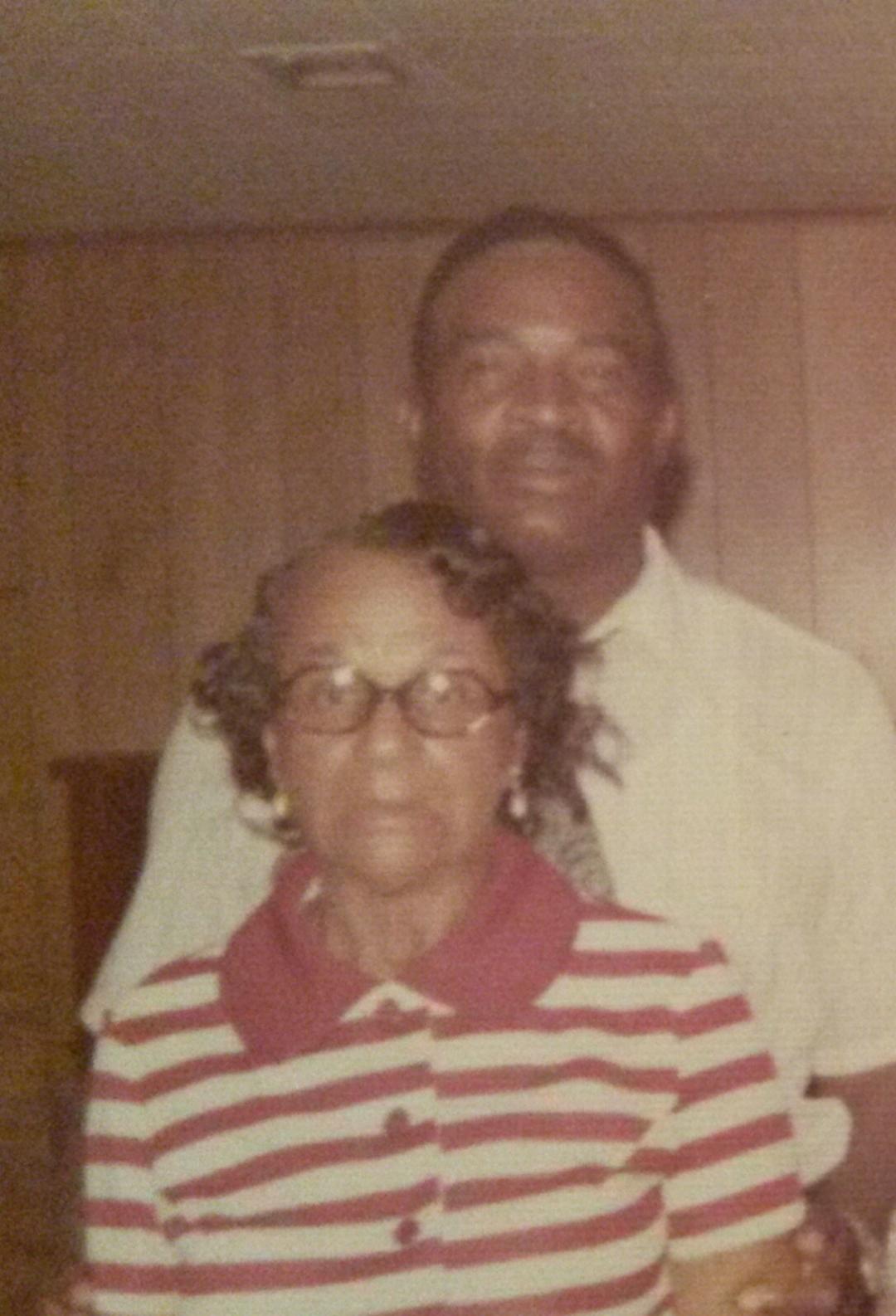
Uncle Henry Migrated Up North in the Early 1920s

Henry Harrell
Henry was born to the union of Alexander and Emma Mead Harrell in 1887. He died in Racine, Wisconsin in 1967. Uncle Henry is buried in Graceland Cemetery in Racine, Wisconsin in Section #7. Henry and his sister and brother migrated up north in sometime in the 1920s. His sister Bertha migrated to Chicago, Illinois and he and his brother Warner with to Wisconsin. I never heard my mother say that my grandfather ever traveled up north to visit his siblings.

He served in World War I In 1942; he was fifty-four years old when he signed the World War II Draft Registration Card in Milwaukee, Wisconsin. In the 1940 United States Federal Census, he was married to a woman named Ruth, and they lived at 804 A. W. Somers in Milwaukee, Wisconsin.

According to the U.S. City Directories, 1822-1995,  Henry and Ruth lived in on 576 7th Street in 1927.  He was a Porter.

 In 1940 he worked in a Syner Steel Company on 43rd & W. Mitchell St. in Milwaukee as a Steele Finisher.  Henry completed 7th grade.  I found him on the tree of a person named Esnow, and I'm hoping that this person can shall some information about Henry with me.  There were other people living in the house with him in the 1940 United States Census. His brother Warner was living in the house with him and his wife, Ruth.  Living in the house was lodgers named Williametta Smith and her son Clarence Smith. Williametta Smith mother Rosa Everett also lived in the house. Ruth was born in Mississippi.  Rosa and Williametta were also from the state of Mississippi.

Warner Harrell
World War I
Hurricane Barry allowed me to do some very indebt research on my Harrell family. I took to social media after I found a lead. I did contact the person that is connected to Henry and his brother Warner names. If this person turns out to be the grandson of Warner Harrell,  hopefully, he can tell me more
information about the Harrell family in up north.

Years ago my Uncle Raymond took me to Milwaukee to meet Cousin Dan Harrell one of Warner's two sons. In 1940 Dan was twenty-two years old and, he was living with his mother. Dan was worked at a Tannery as a Paster. His brother Willie was nineteen and worked at Ugertes of Drad as a Junior Clerk.

I'm anticipating Warner contacting me very soon to see if we're related. I can't ever recall them visiting family members down south. It's safe to say that they haven't met any relatives down south. I think I will keep putting irons in the fire and sit back and wait for new leads.


Finding My Priscilla

Randall and Priscilla "Silla" Blackburn Harrell
Marriage License: December 26, 1867
Source: Union Parish Courthouse
Whenever any genealogist or family historian finds an ancestor in their research is exciting. For over twenty-five years, I have been researching my Harrell side of the family. My mother's side of the family is my Harrell lineage. Most of my family didn't have any knowledge past my grandfather Jasper Harrell, Sr., parents, and siblings before my research.

Jasper was two years old when his father Alexander passed away in 1914. My mother told me that her father couldn't tell the family anything about the generation before him except that they came from Clinton, Louisiana. I went to the Main Library in New Orleans and certain the United States Federal Census starting at 1930 at that time. The 1940s census wasn't available when I started researching my family history. I started researching the Harrell's in Tangipahoa Parish and found grandfather Alexander and his wife Emma Mead Harrell and all their children. 

Alexander Harrell
Randall and Pricilla Blackburn grandson
Son of Robert and Dinah Harrell
When I got to the 1920 United States Federal Census, I found that Emma was now the head of the household since her husband Alexander had passed away. Living in the house with her were her children; Alexander, Palmer, Theodore, Margareta, Jasper, and her father-in-law Robert Harrell.

A level of excitement took over me when I found Alexander's father, Robert. Robert's wife Dinah or Darska had died sometime back. In the 1910 census, Robert was living along and he was widowed. Robert was born in 1821 in Mississippi and died in 1921 in Amite, Louisiana. He and his Dinah had six children.

That was just about as far as I could go back twenty years ago. A couple of months ago, I found that Priscilla " Silla" Blackburn married a man named Randall Harrell in 1867 in Union Parish, Louisiana. Randall was seventy years old and Priscilla was sixty five when they got married. In the 1870 census Randall and Priscilla were living in Ward 3, Union Parish, Louisiana. Randall was born around 1800 and was seventy years old. Priscilla was born around 1805 in South Carolina or Virginia.  Now, I know who Robert's father was Randall Harrell.  I can't wait to travel to Union Parish to conduct more research at the courthouse and visit the local genealogy library. I hope that I can make a connection with Randall's brother Thomas descendants that could take me to the local cemetery. I met several of Thomas Harrell's descendants on Ancestry. Here are the questions I need answers too:

1. Who owned Randall Harrell?
2. Why did they leave East Feliciana Parish?
3. Where is his brother Thomas descendants?
4. Did Randall and Silla have other children?
5. Why did they return to East Feliciana Parish?
6. Who were her parents?
7. What part of South Carolina?
8. Does the Blackburn name trace back to South Carolina?

I contacted the Clerk Office and Union Parish to purchase Randall and Priscilla Blackburn Harrell's marriage license. When I went to the mailbox and found the marriage license at arrive, I was so excited. There is nothing like travel there personally to research the records in the courthouse. Any information I can locate on my Harrell ancestors is just one more missing piece of the puzzle that is important to the bigger picture.

The great-granchildren of
Randall and Priscilla Blackburn Harrell


Wednesday, July 10, 2019

Martha Burton Boykins Family History

Malinda and Louis Marriage License 1867
Martha Burton Boykins is my paternal 2nd Great grandmother. She was born circa 1868  in St. Helena Parish, Louisiana to Louis and Malinda Burton.  Malinda was part of a large family. She is one of eight children born to Louis and Malinda. Her siblings were; James, Dotia, Celia, Mary, Ellis, Louis, Edna, and John Burton.  

Malinda was born around 1850 in St. Helena Parish, Louisiana. According to the 1880 United States Federal Census, her father was born in Georgia and her mother was born in Louisiana. Malinda and Louis were married on February 23, 1867, in St. Helena Parish.  Malinda died at the age of 86 on February 10, 1936, in Tangipahoa, Louisiana. 

She later met and married Jacob "Jake" Boykins. She and Jake had eight children; Ural, Charity, Lorence, Carrie, Missouri, Elenora, John, and Ernest Boykins. Martha died in 1946 in Tangipahoa Parish. 

One day I interviewed my father about his grandmother Martha. He was a little boy but he remembered spending time at his grandparent's house. I wish my father was here to see all the research I'm finding on his family. 

She is buried in Tangipahoa -Quinn-Brown Cemetery. 

Wednesday, July 3, 2019

Courthouse Genealogy Research in Sumner, Mississippi

Sumner Courthouse Peonage Research
Photo Credit: Walter C. Black, Sr. 
I've had the opportunity to travel to many courthouses throughout the Louisiana and Mississippi searching for my ancestors or helping someone else search for their ancestors. One thing is for sure the books can be  heavy to lift. Not to mention the dust on the outside of the books. "So if you suffer from respiratory problems, you may want to wear a mask to keep the dust from getting in your nose."

I strongly suggest that you wear comfortable clothing and shoes. You may find your subject in the index and may have to pull several books off the shelves. Be prepared to do a lot of bending down in search of the book you need. A magnifying glass can be helpful when you are reading scripted writting. Make sure you have enough time and not be in a big rush to leave. If you are taking someone along with you, be sure to let them know that you will be a couple of hours. 

The picture shows the amount of dust on the book. The book was at the very bottle of the shelf and it appeared to be untouched for a while. All the index keys were dusty too. This is not uncommon at all.  The points that I'm making is to be prepared for the research trip.

Monday, May 27, 2019

Ernest and Mary McKay Boykin of Fluker, Louisiana

Ernest and Mary McKay Boykin
Photo Courtesy: Sharon Boykin
During the time that my dad transitioned, my cousin Sharon shared family images with me. One of the pictures she shared with me was of our paternal grandparents. My grandfather Ernest was born in 1908 and died in 1978 in Fluker, Louisiana. 

He and grandma Mary were the parents of; Ernest Boykin, Jr., Florence, Walter, Lonnie, Francis, Jerry, and Ellis.  Grandfather Ernest worked at Kent Piling Co in Fluker, La.  He lived in Tangipahoa Parish all of his life. His parents Jake and Martha Burton Boykin were natives of Tangipahoa Parish all of their lives as well. 

His U.S. WWII Draft Young Men Card from 1940-1947 stated where he was employed at.  Before working at Kent Piling Co, he was a farmer. According to the 1940 United States Federal Census, he obtained a 3rd-grade education.  I wanted to see who their neighbors were, I found families with the surnames of; Walls, Thomas,  Ards, and Foust. 

Grandma Mary was born in 1904 in Mississippi.  She was the daughter of Charlie and Florence McKay Williams.  The family lived in Beat 5, Pike County, Mississippi on Chatawa Road. She had a brother named William McKay. Charlie worked at the Saw Mill as a wage earner. He rented his home and was unable to read or write. 

Florence was born to Alex and Rebecca Ann Bates Williams in 1858 in Amite County, Mississippi. Alex and Rebecca both died in 1927.  Great-grandma's Florence siblings were; Jerry, Florence, Ada, Amanda, and Rosa Williams.  Florence father Alex was born in 1857 in Mississippi. Alex and Rebecca were married in 1877. Alex was listed in a mulatto in the 1920 United States Federal Census. 

In 1920 he lived on Magnolia Road on a farm. His mother and father both were born in Mississippi. Alex owned his farm, and he couldn't read or write according to the census.  I checked ancestry public trees to see if I could find anyone who is searching the same names. I did find someone with the last names; Powell, Robinson, Guice, Harness, Russell, Hebert Family Trees with Alex and Rebecca in them.


The History of Percy and Creola Atkins Johnson

Creola Atkins Johnson
Photo Courtesy: The Johnson Family
I heard a lot about the Atkins family of St. Helena. People often talk about a man named John David Atkins. Everyone called him J.D. Atkins. He was a farmer who owned a produce packing shed where they took the produce after harvest time for packing and selling.  African-American farmers weren't getting the best and fair prices for their produce in the Tangipahoa and St. Helena Parish.  J.D. would take their produce to the French Market in New Orleans and get a better price for them. He rented space to sell produce at the French Market. 

J.D. parents were Monvill and Susie Hickerson Atkins. They were the parents of; Creola, William, Curtis, Lawerence, John D,  King Davis, James, Idella, Nannie, Mary Monvill  Atkins. there may be others, but the United States Federal Census only list these names.  J.D. was born in 1918 in Greensburg, St. Helena, Louisiana and died on June 9, 1998. He was buried at Turner Chapel Cemetery. His father Monvill was born in 1877 in St. Helena and died in 1933.

Creola married a man named Percy Johnson in St. Helena Parish.  They had fifteen children; Loukillie, Ike, Evelyn,  Lena May, Jack, Winnie, Shelly, Sampson, Frank, Percy, Melvin, Richard, John Lee, Rose Mary,  Joe Louis Johnson, and Anthony Miles. With so many children to take care of, she stayed at home to take of the family. The only time I saw my mother cry is when I went to Vietnam, said her son Frank. 

Percy Johnson
Photo Courtesy: The Johnson Family
Percy was known as one of the best African-American ropers and cowboys in St. Helena Parish. I interviewed several people who talked about his roping skills. There isn't any written documentation or oral history collections on the African-American cowboys and ropers. Percy son's Richard and Frank often tell me about their father and the kind of man he was. One thing Frank wanted me to know about his father, that his father was a good man and a good provider for his family. Richard is the one that took after his father when it comes down to the love of horses and cows. Frank enjoys hunting like his father.  Frank and his father Percy hunted all kinds of wild game to feed the family.

Stories of the local people are significant to local history. There is so much more to learn about the African-American cowboys and their way of life. Who were these cowboys and horsemen? Where did they live? If anyone knows of any cowboys and horsemen in your family and you would like to share the story with Preserving Our History in Tangipahoa and St. Helena Parishes, please contact me.


Thursday, May 23, 2019

Mack H. McCraney Became the First African -American to Practice Law in Tangipahoa Parish

Rev. Mack H. McCraney is a native of Hammond, Louisiana. he graduated from Greenville Park High School and went on to serve six years in the United States Army. After his tour of duty, Rev. McCraney enrolled at Southern Univerity Law School in Baton Rouge, Louisiana. Upon obtaining his Law Degree, he became the first African-American to practice law in Tangipahoa Parish. Reverend McCraney is Pastor of Mt. Pilgrim Missionary Baptist Church in Ponchatoula, Louisiana and is employed as Assistant District Attorney for the 21st Judicial District Court System.

Source: The Collection of Henry Jackson, Sr. 

Joyce Ann Jackson, First Black Female Warden of Tangipahoa Parish

Joyce Jackson was hired by Sheriff J. Edward Layrisson. On September 1, 1984, as deputy and placed in the jail's kitchen to supervise the inmates cooking meals. In 2010, Sheriff Daniel Edwards promoted her as the first African American Female Warden of Tangipahoa Parish.

Source: The Collection of Henry Jackson, Sr.

Tuesday, May 21, 2019

Deputy Marshal Henry Jackson, 7th Ward, Hammond, LA

Henry Jacksoon, Sr. 
In 1972 Marshal Vic Anderson, City Marshal for the City Court of Hammond, 7th Ward Tangipahoa Parish hired Henry Jackson, Sr. as a Deputy Marshal Marshal Anderson.  Deputy Jackson served court orders issued from City Court of Hammond, Subpoenas, civil citations and evictions were served in the jurisdiction of the 7th Ward of  Tangipahoa which include Hammond, Ponchatoula, Manchac, and surrounding areas. 

After Marshal Anderson retired, his son Gordon Anderson was elected as City Marshal in 1975. Henry Jackson, Sr, was appointed the first African American Chief Deputy Marshal under Marshal Gordon Anderson's administration. The offices grew when Chief Deputy Jackson first became a deputy. His duties included the daily supervision of the Deputy's and  overseeing Courtroom Security.

As of November 5, 2006, Henry Jackson, Sr. has been employed with the Marshal's Office for 34 years during which he served as Chief Deputy Marshal for 31 years. 

Source: The Collection of Henry Jackson, Sr.

Monday, May 20, 2019

Bobby Carter First African American Deputy Clerk for the City of Hammond

Ms. Carter was appointed as the first African American Deputy Clerk for the City Court of Hammond, Louisiana by the Honorable Judge Leon Ford, III on May 19, 1969. She worked as Docket Manager for the Juvenile Court for a total of 33 years.

Source: The Collection of Henry Jackson

Donald Dotey First African American Louisiana State Trooper in Tangipahoa Parish

Donald Dotey, Master Trooper was the first African-American State Trooper in Tangipahoa Parish. Donald was from Tangipahoa Parish. He served from December 1975-December 1996.

Source: The Collection of Henry Jackson

Connie L. Dotey First African American State Trooper Southeast Louisiana

Connie L. Dotey was the first 1st Black Female State Trooper Southeast Louisiana. The 2nd in the State of Louisiana. Trooper First Class 1977-1987. She was the first African American Female Major Tangipahoa Sheriff's Office and Retired in July 2004.

Source: The Collection of Henry Jackson

Dr. J. L. Garrett the first African American Veterinarian in the City of Hammond

Dr. J. L. Garrett is a native of Newton, Texas. He graduated from Liberty High School in Newton. Dr. Garrett then attended Prairie View Colleg and went on to Tuskegee University where he obtained a Doctor of Veterinarian Medicine Degree. He then went on to serve his county as a Captain in the United States Air Force. After his tour of duty, Dr. Garrett resided in Milwaukee, Wisconsin. In the year of 1960, he moved his family to Hammond, Louisiana where he opened a Veterinarian Clinic thus, becoming the first African American Veterinarian in the City of Hammond.

Source: The Collection of Henry Jackson

Melvin Finn Was the Amite First Black Policeman

Melvin Finn was appointed as the first black policeman in Amite on August 15, 1966. His duties were to patrol the black areas of Amite. He was ordered to limit any action to the black sections of the town and black citizens. Of course, after establishing himself as a policeman capable of handling any detail these restrictions were brought forward and conditions were changed.

Officer Finn was named Assistant Chief of Police in 1981. He retired in August 1990 after serving 24 years. He was married to Ora L. Finn. They have three children and three grandchildren. Melvin is a member of Butlers AME Zion Church in Amite.

SourceL The Collection of Henry Jackson.

Rudolph Paul Gibson of Tangipahoa Parish

Mr. Gibson served on many boards in the State of Louisiana and the Parish of Tangipahoa. He was appointed by Gov. Edwin Edwards to serve on the State Juvenile Board.

Source: The Collection of Henry Jackson

Sunday, May 19, 2019

Sheriff's Deputy Edward Toefield, Jr., Killed in the Line of Duty

Sheriff Deputy Edward Toefield, Jr. 
February  2, 1984, Sheriff's Deputy Edward Toefield, Jr., was shot and killed by a bank robbery suspect just south of Amite. His killer was captured the following day, tried and sentenced to death.

Source: Amite Genealogy Library.

Celebrating the Life of Walter James Boykins

Walter James Boykins was born to mary and Ernest Boykins in Fluker, La., on August 6, 1938. His is the third child of seven. Walter attended West Side Hight School in Amite, La where he played quarterback on the school's football team. In 1958 toward the end of the football season, Walter broke his neck and had to stay in the hospital for two years. Once he recovered, he attended Xavier University for 2 1/2 years. Mr. Boykins later dropped out fo school to help his moother and father in their time of need. He got a job at a chemical plant where he worked for years.

Walter met and married Rosalie Boykins. They married for 50 years in February. In 1982, Walter started working for Goliath in the field for 1 1/2 years and then began driving trucks for the company. He has been with them for 26 years now. Over the years, he had learned a lot just being around all the great workers from the company, especially  Harry Lazarus. Even though his work days have come to an end, he deserves to sit back, relax, and enjoy life with the remote in one hand and Brandy inthe other. He preceded in death by his mother Mary Boykins and father Earnest Boykins Sr., borhter Earnest Boykins Jr., Jerry Boykins, Lonnie Boykins, Ellis Boykins, and his sister France Boykins, his Florence Boykins, his children children Patrick Boykins, Antoinette Harrell, Zelda Mitchell, Edward Johnson, Kennedy Johnson, Shelia Johnson, Charlie Williams, his grandchildren Kanika Thompson, Renesha Scott, Joseph LaCoste, Bernard, LaKeith Grear J., and his great-grandchildren Tyrik Brigalia, Ky'Lel Thompson, Tiffany Morris, Tyanune Morris, and Patrice Morris. 

Reconstruction in Tangipahoa Parish 1869-1877

In the last public speech at the White House on April 11, 1865, Abraham Lincoln called for emancipation for the entire nation.

This plan was, in advance, submitted to the then Cabinet, and distinctly approved by every member of it. One of them suggested that I should then, and in that connection, apply the Emancipation Proclamation to the theretofore excepted parts of Virginia and Louisiana; that I should drop the suggestion about apprenticeship for freed-people, and that I should omit the protest against my own power, in regard to the admission of members to Congress; but even he approved every part and parcel of the plan which has since been employed or touched by the action of Louisiana. The new constitution of Louisiana, declaring emancipation for the whole State, practically applies the Proclamation to the part previously excepted. It does not adopt apprenticeship for freed-people; and it is silent, as it could not well be otherwise, about the admission of members to Congress. So that, as it applies to Louisiana, every member of the Cabinet fully approved the plan. The message went to Congress, and I received many commendations of the plan, written and verbal; and not a single objection to it, from any professed emancipationist, came to my knowledge, until after the news reached Washington that the people of Louisiana had begun to move in accordance with it. From about July 1862, I had corresponded with different persons, supposed to be interested, seeking a reconstruction of a State government for Louisiana.

Genealogy researcher can learn a great deal from conducting genealogy research and local history research in Tangipahoa Parish about Reconstruction.   In 1866 my maternal third great-grandfather  Robert and his family entered into a contract with Eliza Andrews in St. Helena Parish, Louisiana to work as
tenant farmers.  It was on this property that he lived with his wife, 30 years old, his son Alex Harrell, 16,  his son John, 12 years old, and his two daughter Millie, 10, and Anna Harrell, 8 years old. 

The vision of pioneers like Rev. Arthur Tasker, founder of the Tasker A.M.E Church in Ponchatoula. In 1872, he became the first and only African American to be elected as the Mayor of Ponchatoula. .  Louisiana.  The Tangipahoa Parish Color Training School was founded in Kentwood, Louisiana by Armfield Mitchell Strange.  Thomas Freeman, the first African American man to purchase land in Livington Parish was a free man of color.

A man named Robert "Free" Bob" Vernon purchased thousands of acres in Tangipahoa Parish for him and his family.  The land he donated for a school, church, and cemetery is the result of his generosity. The first African-American church was founded by Charles Daggs of Hammond, Louisiana in 1877.  These men was among others African-American leaders in Tangipahoa Parish, Louisiana, attended meeting to improve and enhance the lives of African-Americans in the parish.     

Tangipahoa Parish was formed in 1869 and Reconstruction ended in 1877. The life of American-American during Reconstruction wasn't document in the Louisiana Florida Parish. From Ponchatoula to Kentwood, Louisiana. On Wikipedia, it is written that during the period of 1877-1850; a total of 24 blacks were lynched by whites in the parish as a means of racial terrorism and intimidation. 


Friday, May 17, 2019

Willie M. Chaney, Sr. of Kentwood, Louisiana.

O.W. Dillon Training School
Willie M. Chaney, Second Row: Right End
Photo Courtesy: David Chaney
 A couple of weeks ago, David Chaney, the son of Willie McKinley and Edna Chaney, shared a little history about his father.  Willie Mckinley Chaney was born in 1918 to Clarence Chaney and Mamie Bentley Tobias in St. Helena Parish, Louisiana. Willie died in 2008 in Kentwood, Louisiana. He was buried at Oak Grove AME Church Cemetery. 

Willie enlisted in the United States Military on January 14, 1943, in New Orleans, LA., and discharged on February 12, 1946. He served as a Private in the Branch Immaterial, Warrant Officers, USA.  The term of his enlistment: Enlistment for the duration of the War or other emergencies, plus six months, subject of the discretion of the President or otherwise according to law.  He had two years of high school. He worked at Brown Morris lumber yard in Kentwood. He and Raymond Coleman became the first African Americans to own a taxi service company.  Raymond Coleman also owned a movie theater in Kentwood. 

This picture was submitted to Nurturing Our Roots Blog by David Chaney.  Willie is standing on the right end on the second step, second row. 

Willie McKinley Chaney

Annie's Picture Found on Ancestry Public Tree

Annie Richardson Vining and her daugher Laura
Photo Courtesy: Sharone Hall Frisco.
Annie was the daughter of Thomas and Amanda Breland Richardson. Annie was born in 1882  in St. Helena Parish, Louisiana. She is one of the five children born to Thomas and Amand. Her siblings were: Golene, Sophia, John, Thomas.  Annie was married to Benjamin " Pete" Vining. According to the 1920 United States Federal Census, Annie was a widow. She was the mother of Carrie, Laura, John, Leon,  and Luella. Annie husband was the son of Caleb and Ann Vining. His siblings were: Wesley, Louis, Sarah, Cale, William, and Ike Vining. Ben was born around 1875 in St. Helena Parish, Louisiana.

Annie photograph is the only one I have come across of my  2nd great grandfather's siblings. If others have pictures of family members, I hope they would consider sharing with other family members.  I learned that Annie was the oldest child born to Thomas and Amanda. It was her daughter Luella Vining Franklin that told me about Annie. Out of all the stories my mother shared with me about her maternal grandfather Thomas, she never talked about Annie. She only talked about his siblings; Golene, Sophia, and John. Is it because she didn't know about Annie? Why didn't she know about Annie? What happened to Annie?

Amanda Breland Richardson
Courtesy of the late Luella Vining Franklin
On was of my genealogy road trips, I learned of Luella Vining Franklin. She was such a sweetheart; I remember her sitting in her wheelchair or the comfort of her bed crocheting. Luella lived with her daughter Betty off Earhart Street in New Orleans, LA. One Sunday afternoon, I went by to visit her, and she welcomes me with a big smile and a loving heart. After going through the oral family history, I soon learned that she was my maternal grandmother Josephine Richardson Harrell's first cousin. Josephine's father Thomas and Luella's mother Annie were brother and sister. 

That mystery question in my mind couldn't contain any longer. Why didn't anyone ever talk about Annie? Well after talking with cousin Luella, I found out that her brother John had accidentally shot Annie and she died of lockjaw. Luella, remembered her grandmother Amanda because lived with them when her father Ben died of smallpox in the wood. He had no other choice but to be quarantined from the rest of the family according to Luella. She remembered they would walk in the woods near the old shack and put food down on the ground for him. Once they left and was safely away, Ben would leave the cabin to get the food.  A sad look came across Luella's face when she talked about her father and what he went through. I could only imagine the loneliness and illness he felt. I'm thankful to my cousin and family historian Sharonne Frisco Hall for shaing this picture of Annie with the Richardson and Vining Families. 

Sunday, February 3, 2019

Noah Augustus James and Lillie Webber James Founders of N.A., James Funeral Home


Noah Augustus James and his wife
Lillie Webber James
Photo Courtesy of Eddie Robinson
Noah Augustus James, Sr., was born in Mississippi in the 1910 United States Federal Census he lived on Tarply Street in Osyka, Mississippi. He is listed as a mulatto. Noah died on March 25, 1940, and he is buried at Greenlawn Cemetery in Hammond, Louisiana.

According to the1930, United States Federal Census Noah was born around 1890. He was living in Hammond, La.  He was an undertaker by occupation. He was living in the home with his wife Lillie and children; Gistena, Valina, Cara, Noah, and Ollie B. James. 

Everybody in the community of Tangipahoa called him N.A. James. N.A. James Funeral Home, Inc., was established in 1931. The funeral home has been in existence for several generations and still serve the African American community. 

Wednesday, December 12, 2018

The Next Generation Learning the Importances of Historic Preservation

Chase LaCoste
Photo Credit: Antoinette Harrell


There is a huge lack of interest in history and genealogical studies in our youth. While our youth embrace technology, "the question is are they using the technology to learn about their history and culture?"We must find creative ways to teach them about their history and the historic contributions their ancestors and family have made to the society they live in. 

One of the many tools I use to teach my grandchildren about their history is visiting the local museums and library. There are many fun and educational learning activities that will help encourage them to learn more. When we plan a museum field trips we make a day out of it. For starters, we get the map out to manually find the highway and roads we will take to get to the museum.  We search for other historic places to visit while we are there.  The children use their technology gadgets  to answer the following questions;


Where is the museum located?
What can we find in the museum?
Are there any exhibitions on display?
How long would it take to see the museum?
Can we take pictures at the museum?
How long does it take to get there?
Are there any rivers, or lakes to cross?

Recently I made another donation to my collection at the Center for Southeast Louisiana Studies and my sons were part of this historic occasion. While driving we were talking about the collection and why I decided to donate the items. They understood the importance of me preserving history that involves them.  It's never too early them about their history and allow them to ask questions. If you don't have the answers, this is a good time to learn and explore together. 

My grandson was delighted to be a part of this historic event. The smile on his face tells it all. While they were waiting for me to finish signing the forms for my donation. Chase and the two other boys visit the World War II Exhibition at the Center. 


Sunday, December 9, 2018

Festus Mix Walker and Corean Briggs Walker Family History

Photo Credit
Find A Grave
Dr, Percy Leroy Walker was born on December 18, 1918, and died October 1995 in Amite, Louisiana. He was the son of Festus M. Walker and Corinne Briggs  Walker.  He graduated from Southern University in Agriculture Education and Tuskegee University in Veterinary medicine. He also graduated from officer training school and served in WW II and the Korean War as 1st Lieutenant. After his service years, he was a substitute teacher, social worker, and a government meat inspector. He established the Amite Veterinary Clinic in 1953 and continued his practice until 1995. He considered this area a "veterinarian's paradise" and loved his work as well as the people. On any afternoon he can be found vaccinating, dehorning and castrating animals. Vaccinations were for bangs disease, blackleg, and malignant edema. Dr. Walker said he vaccinated some 1,000 animals a year, primarily large ones. He is buried in the Amite Memorial Gardens Cemetery in Amite, Louisiana.

Harrison was born in 1859 in the Mississippi. He and his wife Philis were the parents of; Handy, Florence, Albert, Charley, Fancy, Elizabeth, Geneva, Jessie, and Mary Walker.  Their son Festus Mix Walker and his wife Coreen were the parents of; Louis,  Curtis, Willie Mae, Deletta,  and Percy Walker.

"Thomas Freeman" A Free Man of Color Owned A Plantation in Livington Parish, Louisiana

Thomas  P. Freeman was born about 1811 according to the 1870 United States Census.  He was born in Louisiana, He was married to a woman named Isabella. The household members were; Levi, Tom, Indiana, Jane, his wife Isabella, Hammond, and Dicy Freeman.  

The 1830's United States Census recorded him as a freeman. There were a total of 5 Free People of Color living in the house. One male between the age of 36-54; One female under the age 10; 2 females between the ages 10-23; 1 female between the age of 24-35.

In the 1880 United States Federal Census. Thomas father's birthplace is recorded as Africa. His mother birthplace was Virginia.  It's recorded that Thomas knew how to read and write. He worked as a farmer in the 5th Ward, St. Helena, Parish,  Louisiana.

Further, into my research, I found that Thomas served in the Civil War. His wife Isabella filed for her widow pension on August 1, 1890. He served in E. 32. USC. Infantry. The 32nd Regiment United States Colored Regiment was organized by Camp William Penn in Pennsylvania in March 1864. He was a private in Company E.  The date he Mustered into Service was February 26, 1864. He mustered out with Company, August 22, 1865.
Isabella Freeman
Widow Pension File

The son of Thomas and Isabella was also named Thomas. He was born around 1855 in Louisiana.  Thomas Freeman, Jr., was married to Alice Stilley. They gave birth to the following children; Monore, Mattie, John H, Allice A, Author, Alfetter, Rosa, Clara,, Viola, and Leroy.


Further, into my research, I found that Thomas served in the Civil War. His wife Isabella filed for her widow pension on August 1, 1890. He served in E. 32. USC. Infantry.

Thomas purchased the what is now called Carter Plantation, a historic plantation house located in Livingston Parish. He purchased the property he called "Sycamore" between 1817 and 1820, from James Rheem. The property was around 2,000 acres.  He was the first African American to own property in St. Helena Parish. Throughout the years the ownership changes. The Cypress swamp was a major timber source for the area. The Blood River was used to transport the rich cypress timber south. 

The Hammond Vindicator published an article as part of their Bicentennial series on "Bloody Tangipahoa," Freeman was the first man to record a legal transaction in the Greensburg District of  Louisiana. Freeman was the first black man to own property in what is now Livingston Parish. Freeman with some means and he owned large tracts of property. In 1838, he sold the land and house to W.L. Breed a local political figure. Breed had been sheriff of St. Helena when Livingston was created

It is noted that there were two schools on the site. One for the slaveholder's children and family. The second school was hidden in the woods for the slave children to secretly be educated.  


MAJOR BIBLIOGRAPHICAL REFERENCES

"Bicentennial Notes," Hammond Vindicator, June 26, 1975

1830 United States Census

1870 United States Census

Carter Plantation website, http:www.carterplantation.com/index.htm

1869-2019 Marks the 150th Anniversary of Tangipahoa Parish

Picture Unknown
Courtesy of Monteral Latrice Harrell
I became acquainted with the undocumented history of African American people in Tangipahoa and St. Helena Parishes through images collected for my new book entitled Images "Images of America" African Americans in Tangipahoa and St. Helena Parishes. The parish of Tangipahoa was formed in 1869 during Reconstruction. It was created by taking territory from St. Helena, St. Tammany, Livingston, and Washington Parishes. The name derives from the Tangipahoa Native American who lived in the area.  The name Tangipahoa comes from an Acolaspissa word meaning "ear of corn' or "those who gather corn. Tangipahoa is the youngest of the Florida Parishes.


At the end of the Civil War, many former enslaved Africans remained in the parishes with their families.  Virtually left without land and other resources that would help to sustain them, they were determined to start a new life.  After four hundred years of slavery and hard work, they had to search for that new freedom with only the rags on their backs. They knew that road would be a very challenging road with many triumphs ahead.  But they were determined to meet the many challenges in front of them. The only thing they owned where their skills. The very skilled they used to work for the former slavemasters, they used them to work for themselves.

The parish was created only six years after slavery was abolished in the United States. For the most part, many African American people who have lived in Tangipahoa Parish now were already living in  the Florida Parishes. It's important to know when the parishes were created when you are historically researching or conducting genealogy research. Livington Parish was created in 1832, St. Helena Parish was created in 1810, and Washington Parish was created in 1819.  

The history of many African American people living in Tangipahoa can be traced back to St. Helena Parish because it is the oldest parish of the four Louisiana Florida Parishes. Although some African Americans may trace their family origins back to East Feliciana Parish.

Dr. Kingsley B. Garrison
Photo Credit: Antoinette Harrell
They made their owners very wealthy through their hard labor. In 1862, Representative Thaddeus Stevens introduced a bill in Congress to confiscated slave owners' land and distributed it to the former enslaved Africans. The news quickly spread that each family would soon be given  "40 acres and a mule, to start their farms.  During the Civil War, Union General William T. Sherman did in seize plantations in South Carolina and Georiga. He distributed 40-acre plots of land to about 40,000 former slaves in the two states. Later President Andrew Johnson removed the newly freed slaves from the land that were issued to them. 

I've traveled many back roads throughout St. Helena Parish in search for plantations. The Carter Plantation also known at the Carter House is a historic plantation in Livingston Parish. I haven't seen any plantations and cabins to tour in St. Helena. St. Helena plantation life is somewhat non-existent. My ancestors on my maternal side of my family history traced back to St. Helena Parish. Benjamin and Celica Bankston Richardson owned Carrie, my 4th great grandmother, and child Thomas. Although many of the plantation homes and cabins aren't there. You may be able to find your ancestors in the wills, successions, and probate records in the courthouse.

Nellie Berry and  her sister Philicity
Courtesy: Lillian Bates 
African Americans in Tangipahoa and St. Helena Parishes worked hard to purchase their own land and some started their own business. They built their own school to educate their children. Other became sharecroppers or tenant farmers on land they worked. They signed Freedmen Bureau Contracts with landowners, agreeing to give them a portion of the crops in return for seeds, clothes, shelter, tools, mules, and some staples.


Robert "Free Bob" Vernon purchased thousands of acres of land for his family. He donated land for the church, school, and cemetery.  Jim Temple also owned large tracts of land for him and his family. My great grandfather Robert Harrell and his son Alexander Harrell purchased land in 1888. A lot of African American families still live on the land that their ancestors purchased. The more I research about the undocumented people who made great contributions to these two Florida Parishes, the more I want to share.

In 2019, we are embarking upon Tangipahoa Parish sesquicentennial celebration. My ancestors had lived in Tangipahoa Parish for 150 years like so many families. We are proud of the contributions and should celebrate through a series of events that can help us commemorate our past and present. 150 years later, where are we?  Can we empower the future by sharing our history?


Friday, December 7, 2018

Eddie "Rip": Lee Obituary

Eddie " Rip" Lee Nelson was born in Columbus, Mississipi to the late Jim Nelson and the late Cornelia  Brooks on July 24, 1936. In 1951 Cornelia married an awesome man named Tompy Shinn who raised him as his own. He was a graduate of Columbus High School in 1954 and continued his journey into the U.S. Navy and serve 12 years. Later he became an employee of Shell Oil of Amite, LA. He was a very compassionate and loving person to his family and friends. He never minded giving a person a place to reside. "Rip" has a heart of gold and everyone around him knew that of him. May God be with you and rest on.

Eddie " Rip" Lee Nelson will be truly missed but will live on through those that loved him. He leaves behind two beautiful daughters: Lawanda Irving (Hammond, LA) and Ton Irving(Amite, LA). Seven grandchildren that truly loved him and he adored: Treston & Shanna Irving, Madison, and Christian Hill, Jo'elle, Chase & Connor Lacoste. They all truly love their "Paw-Paw." He had one great-grandchild, the precious "Cassius Amir Irving." He had a great caregiver that cared for him 17 years and she was truly a blessing to him; Rosemary Seiber-Watts. There was also Leonard Hickerson as a special friend who was truly a blessing as well. He had many friends that helped him as a well and there is to many to name but they were a blessing to him. 

Eddie Lee Nelson was preceded in death by his parents; Cornelia Shinn & Jim Nelson, Tommy Skinn; one daughter Remina Collins, one brother Paston Johnson, two sisters; Flora Mae Copeland & Mary Warford, one niece Sylvia Renee Warford,  and one nephew Earl Warford.


Source: The Funeral Program of Eddie" Rip" Lee Nelson

Monday, December 3, 2018

Celebration of Life for Mother Willie Mae Dunn Williams

Mother Willie Mae Dunn Williams
Funeral Program
Mother Willie Mae Williams, known affectionately by her family as, "Mae Mae," departed this life on Tuesday, November 27, 2018, in Greenburg, Louisiana. She was born on May 9, 1918, in Centerville, Mississippi to the late Theodore Dunn, Sr. and the late Gladys Chapman Dunn. She was the second child of eight children. In 1949, she married Willie Williams, Sr, and to this union, four children were born. Willie Mae was a devoted and loving mother. Mother Willie Mae was a woman of faith who dedicated her life to Christ at an early age. She began her Christian journey at New Hope Baptist Church in Mississippi. When her family relocated to Louisiana, she joined Brown's  Chapel Baptist Church under the leadership of Rev, Andrews. Later she joined Orange Grove Church of God in Christ under the leadership of the late Sup. Alonzo Richardson and after his demise, she served faithfully under the leadership of Supt. J. A. Richardson until her death.

The church, fashion, elegances, patience, and family, these are all words that describe Mother Willie Mae. During her lifetime, she was a daughter, sister, wife, mother, grandmother, and a friend., but most of all she was a woman of God. She will always be remembered as a loving individual whose greatest passion was serving God and helping others.

Mother Willie Mae Williams leaves to cherish her memories three children: Willie Williams, Jr., (Gwendolyn) of New Orleans, La, Leon Williams (Shelia) of Kentwood, La, and Faye Brumfield (Jeremiah) of Hammond, LA; fifteen grandchildren, forty-five great-grandchildren; three great-great-grandchildren, one brother Leon Dunn (Minnie) and one sister: Ruby Lee Gilmore, both of Kentwood, LA and a host of nieces, nephews, other relatives and friends.

She was preceded in death by her husband: Willie Williams, Sr., her father: Theodore Dunn, Sr., Mother:  Gladys Chapman Dunn; one son: Robert Lee Williams; three brothers, Deacon Theodore Dunn, Jr., Charlie Dunn, Will Henry Dunn, two sisters, Gertrude Perry, and Gena Mae Chapman, one grandson: Robert T. Sibley, and one great-grandson: Willie Williams, IV.


Source: Funeral Program for Mother Wille Mae Williams

Friday, November 30, 2018

Aline Turner Was A Woman of Means

Aline Turner's Bank Book
Photo Courtesy: Lillian Bates

Aline was a woman of some means. She had a bank account with Drexel State Bank of Chicago in 1917.  In 1920, Aline was living in Chicago and she worked as a dishwasher in a restaurant. She was listed as a Mulatto. Aline was born circa 1880. The United States Federal Census in 1920 said that she didn't attend school, but she knew how to read and write. 


When we study our own family history it can tell us so much about our ancestors and ourselves. Certainly, it can tell a lot about the lives our ancestors lived.  Aline also had a bank account at Whitney Bank in 1955 and she managed to save a great percentage of her earnings.  Aline purchased several lots in Ponchatoula, Louisiana. 

Her mother Jane Williams lived in Ponchatoula as well. Jane's mother Mary Miller was born in Virginia and her father was born in South Carolina. Jane was married to Barnard Williams.  According to the 1920  Jane was born abt 1843 in Louisiana. Jane worked as a laundress for a private family in Ponchatoula.  2019 will mark the sesquicentennial of Tangipahoa Parish. Tangipahoa Parish was founded in 1869. For the hundredth anniversary in 1969,  we were in the middle of the Civil Right movement and for the most part, African Americans in Tangipahoa Parish didn't participate in the celebration. For this commemoration, I want to highlight the history of African Americans in this parish. 

Aline William Turner
The history of African Americans has been undocumented and many people including African American people do not know some of the accomplishments and struggles that African Americans faced in this parish. Often times people do not like to talk about things from the past, especially African American people. Some say things were so bad that they just wanted to put  it out of their minds. This is why we have to look inside our own homes for documents, records, photographs, and other information that could be vital to our own family history. 

I want to know more about Aline and how she became a woman of means in a time when women didn't have rights to do many things on their own.  "How did she her mother Mary Miller come to Louisiana? Was she sold down south? Did she come with the slaveholders family? Was she a free woman of color?" There are so many unanswered questions about Aline. The people who could possibly answer these questions are now dead.

At this point, the only thing the family can do is preserve what they have in their processions. And hopefully, genealogy websites like Ancestry and Family Search can provide them with some information.  They may find the names of her children, where they lived, her husband name, occupation, and what year they were born. Sometimes we just have to settle for that information if we can't find anything else. Due to slavery, finding information can be limited in most cases. 

One thing for sure, the women in the family was very industrious. They were women who worked hard to have some financial independence. Aline daughters were just like her, I have come to learn a lot about her daughter Nellie.  Every household sure talk about their family history and share it with others. 

Several weeks ago Aline's great-great-granddaughter Lillian Bates met me in New Orleans to show me her collection. She wanted to leave the collection with me and I couldn't allow her to do that. I didn't want to take responsibility for this priceless collection and for the most part I didn't have the time to scan everything. I knew that it would take me a couple weeks due to my busy schedule. Well, the collection came back to me a second time, this time I didn't say no and I accepted it and made it a priority to scan it and mail it back to Lillian. 

After carefully reading every single documents and piece of paper, I learned so much about the history of Lillian's family and found that her ancestors were trying to tell me something. They wanted me to share their story with everyone, especially their offsprings through my blog. They wanted to tell us that through the most challenging times, they were strong and resilient people. They were determined people, they helped build schools, they stood up doing the Civil Rights Movement and most importantly, they left a blueprint, if only we would follow.

Doretha Baker Jackson of St. Helena Parish, Louisiana

Doretha Baker Jackson
Photo Courtesy: Pat Jackson
Doretha Baker Jackson was married to Sam Jackson. They lived in St. Helena Parish, Louisiana., all their life. Doretha was known for working hard in the field. Her granddaughter Pat Jackson said her grandmother worked in the fields planting vegetables. She died from a heat stroke in the field where she spent most of her time.

Thursday, November 29, 2018

African Methodist Episcopal Churches Made A Donation to CORE

Nellie Turner Berry Collection
This newspaper article was found in the Nellie Berry collection. Nellie was an influential African American woman in Ponchatoula and New Orleans, Louisiana. Nellie was a member of Union Bethel AME Church on Thalia Street in New Orleans, Louisiana after she left Ponchatoula and made New Orleans, La., her home.

According to her granddaughter Lillian Bates, Nellie attended church in Ponchatoula as well. Unfortunately, Lillian can't recall the name of the church in Ponchatoula. All the newspaper clippings and other records in Nellie collection hold the key to some very important church and political history for African American progress during the Civil Rights Movement. 

These influential Religious leaders donated a check in the amount of $635.00 dollars to James McCain, field director for  The Congress of Racial Equality (CORE). The article doesn't give us the date the donation was made.  The article states that's that the check was presented at St. James AME Church.

Nellie Turner Berry
Photo Courtesy: Lillian Bates
Nellie saved another newspaper article about Mahalia Jackson performing at a concert and benefit dinner to raise money for Union Bethel AME Church when fell victim to a fire. Rev. Lutrelle was in high hopes that the concert and benefit dinner would pay off the four thousand dollars mortgage they taken out for renovations after the fire. Mahalia was joined by her longtime friend Elliot Von Joseph Veal an instructor of music at Woodson Junior High School.  He brought with him a chorus of singers from numerous of New Orleans churches.

Reverend Lutrelle Grice Long opened the doors of Union Bethel to Dr. Martin Luther King, Jr., Many  Civil Rights activities too place at Union Bethel under his leadership.  A fire destroyed the building in  1962.  According to Union Bethel A.M.E. Church website, it is said that Dr. King spoke before out to the congregation in 1961 and called for " a new emancipation." He urged the President of the United States to issue an executive order to make segregation unconstitutional by way of the 14th amendment. In 2004 during the 75th birthday commemoration, President George W. Bush spoke before the congregation about Dr. King's legacy.

I'm honored to know that a native of Ponchatoula, Louisiana was a member of a powerful church that played a major role in the Civil Right Movement in the Deep South. I'm anxious to know what else can be found in her collection that can shed some light on her role in the Civil Rights movement.

The 1,500 seating capacity of the Union Bethel auditorium was particularly important during the Civil Rights Movement.  There notable mass meetings were held at Union Bethel. Several Pastors of the Historic St. Peter A.M.E. Church is present in this photograph as well; Rev. T. Gaines, and Reven, F. B. Hitchens. 

After the Civil Rights rally at the Municipal Auditorium was banned by court order, members of the Congress of Racial Equality (CORE) held a prayer meeting in Congo Square outside the auditorium Dec. 15, 1961. They then proceeded to Union Bethel A.M.E. Church, St. Liberty at Thalia. The Rev. Avery Alexander, in in the dark overcoat and gray suit, let the procession. Dr. Martin Luther King, Jr., spoke at the assembly. (Photo by Terry Friedman, The Time-Picayune archives) Terry Friedman.


MAJOR BIBLIOGRAPHICAL REFERENCES

https://npgallery.nps.gov/NRHP/GetAsset/ea7eacec-b1a5-4dca-a5f4-3bfd129d15b4

Lillian Bates and Nellie Berry Collection

New Orleans, Time-Picayune Newspaper, June 11, 1966